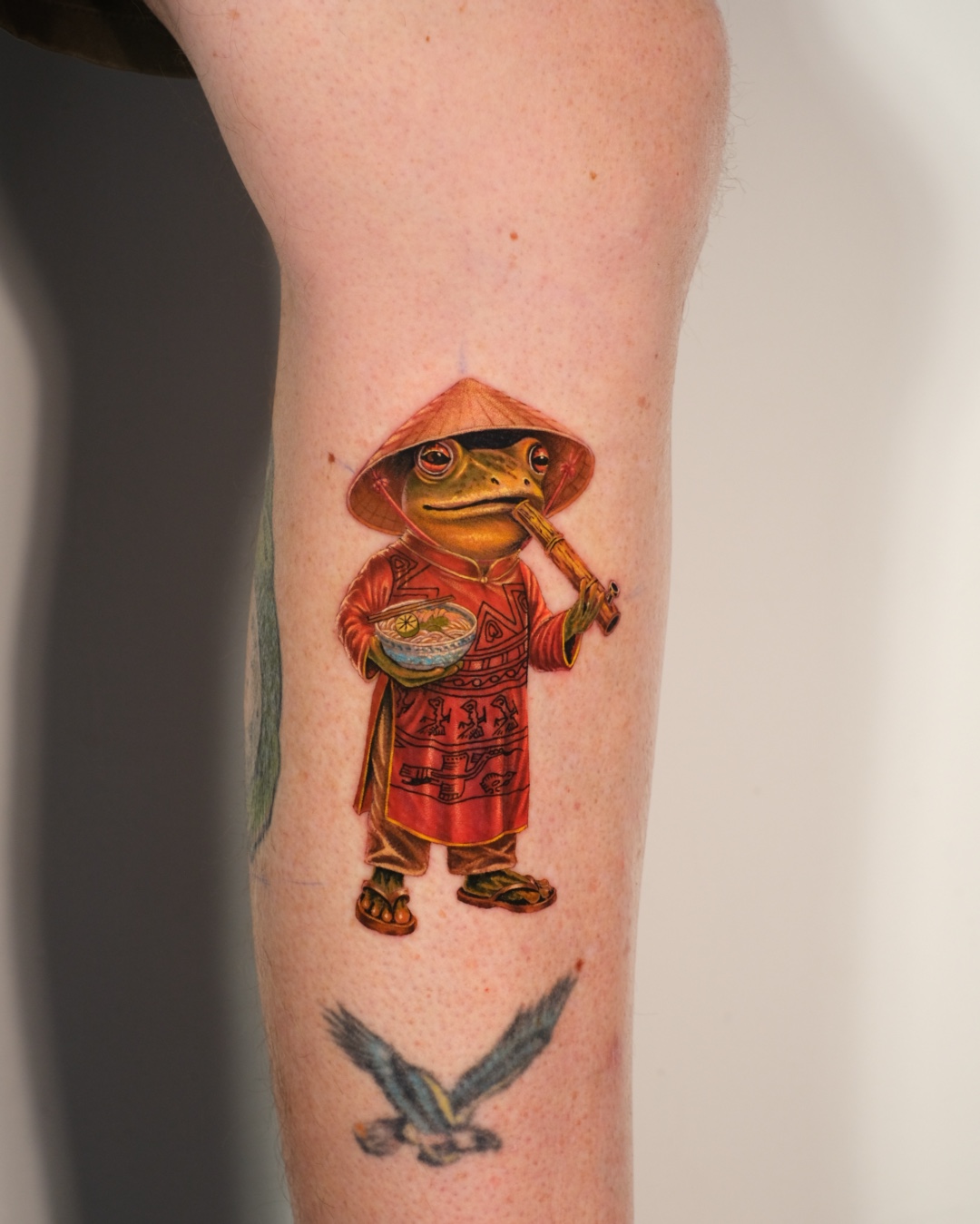
Vietnamese traditional tattoo designs can draw from many layers of Vietnamese culture, including folk imagery, symbolic animals, flowers, decorative elements, and familiar scenes from everyday life.
Some designs have clear roots in traditional or folk imagery, while others reinterpret recognizable elements of contemporary Vietnam. Together, these references give tattoo artists a rich visual language that can be adapted to different ideas and styles.
At Azone Tattoo Studio, these cultural references serve as starting points for original tattoo designs. Rather than simply reproducing an existing image, the artist considers how the subject can be translated into linework, color, composition, and ultimately a tattoo that works naturally on the body.
Vietnamese Folk Imagery as Tattoo Motifs
Vietnamese folk culture offers a wide range of visual references for tattoo design. Animals such as the buffalo, rooster, pig, tiger, and cat can become strong tattoo subjects, alongside flowers, decorative elements, clothing, and imagery associated with everyday life.
The buffalo is a particularly recognizable example. Closely associated with rural landscapes and agricultural life in Vietnam, its distinctive horns and facial structure also provide a strong foundation for graphic tattoo design

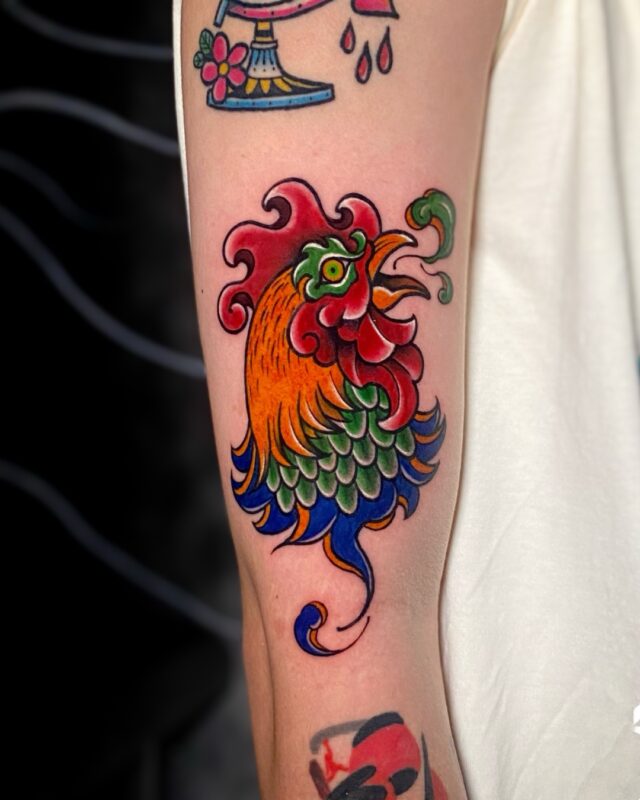
Other motifs can carry equally strong visual identities. Roosters, pigs, tigers, flowers, and objects associated with daily life can be reworked through bold outlines, controlled color palettes, and simplified forms. The goal is not to reproduce folk imagery literally, but to preserve recognizable characteristics while adapting them to tattooing.
From Cultural References to Tattoo Composition
Turning a cultural reference into a tattoo requires more than choosing a recognizable motif. The artist needs to consider how the design will sit on the body, how much detail the available space can support, and which elements should remain dominant.
A successful composition often simplifies unnecessary details while keeping the character of the original reference. Line weight, negative space, color balance, and the direction of the design all help the tattoo remain clear and readable on the skin.
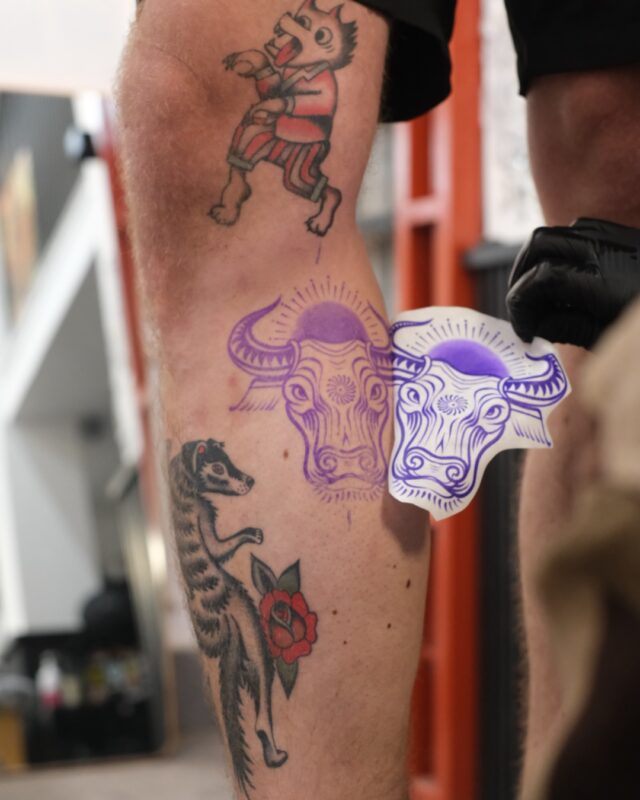
The buffalo design shown here demonstrates this process from concept to skin. Before tattooing, the composition is tested as a stencil to check its scale, placement, and relationship with the shape of the leg. This stage allows the artist to make adjustments before the final lines and colors are applied.

Modern Interpretations of Vietnamese Traditional Tattoo
Vietnamese-inspired tattooing does not have to follow a single fixed aesthetic. Traditional references can be combined with contemporary drawing, different color palettes, and individual artistic styles while still retaining a connection to Vietnamese visual culture.
This approach gives artists room to develop original compositions rather than simply copying existing folk images. A familiar subject can become playful, graphic, minimal, or more expressive depending on the client’s idea and the artist’s interpretation.
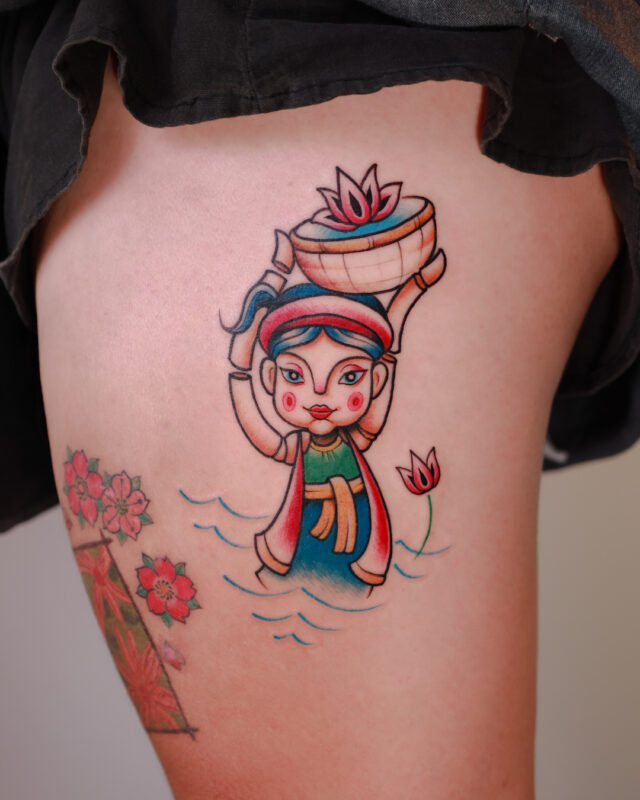
Contemporary interpretations can also transform familiar animals and cultural references through expressive shapes and distinctive color combinations. The result can feel personal and contemporary while maintaining a visual connection to Vietnamese-inspired imagery.

Color, Linework and Visual Language
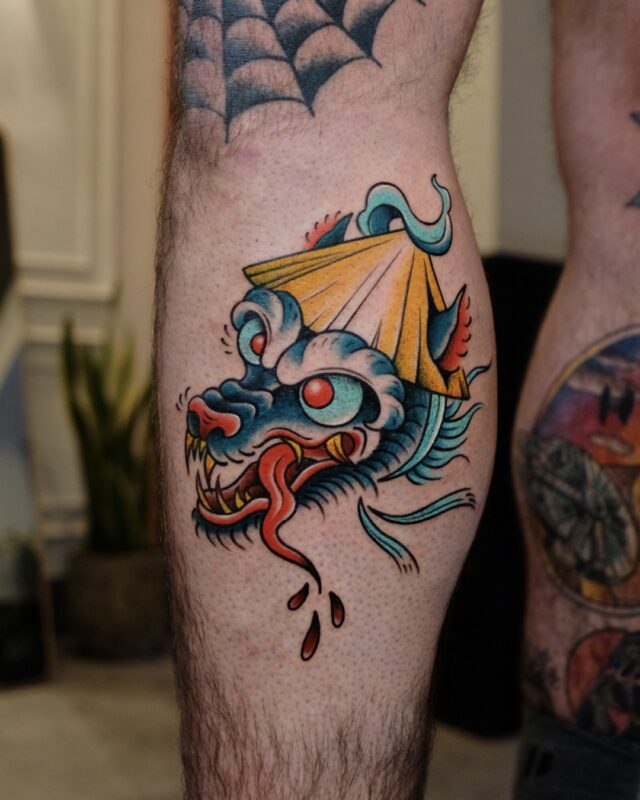
Color plays an important role in many Vietnamese folk-inspired tattoos. Rather than relying on realistic rendering, these designs can use clear outlines and selective areas of red, orange, yellow, green, and blue to separate forms and create visual rhythm.
Linework is equally important. Strong contours establish the main silhouette, while finer lines and small decorative details add movement and character. When these elements are balanced carefully, the tattoo remains clear and readable while preserving the expressive quality of folk-inspired imagery.

The same visual principles can be adapted to very different subjects. Familiar Vietnamese elements, such as the conical hat, can also be incorporated into contemporary tattoo designs, creating a cultural reference without requiring a literal reproduction of traditional artwork.
From Idea to a Finished Tattoo
A Vietnamese-inspired tattoo often begins with a reference rather than a finished design. It might be an animal, an object, a cultural detail, or simply an image that the client feels connected to. From there, the artist develops the idea according to the placement, scale, and visual direction of the project.
During the design process, proportions and details may be adjusted so the composition works naturally on the body. The final drawing is then tested for placement before tattooing begins, allowing both the artist and the client to see how the design interacts with the chosen area.

Creating a Vietnamese-Inspired Tattoo at Azone
For clients interested in a Vietnamese traditional tattoo, the starting point does not need to be a complete design. A reference image, cultural motif, personal memory, or even a simple idea can provide enough direction for the artist to begin developing the concept.
At Azone Tattoo Studio, each project is developed around the client’s idea, preferred style, placement, and size. The aim is to create an original tattoo that reflects its Vietnamese reference while also working naturally with the body and the artist’s individual approach.
If you are considering a Vietnamese-inspired tattoo in Hanoi or Saigon, you can explore our artists and previous work to find an approach that fits your idea. For custom projects, contact Azone Tattoo Studio to discuss the concept, placement, size, and other details before booking a session.
Frequently Asked Questions About Vietnamese-Inspired Tattoos
What motifs are commonly used in Vietnamese-inspired tattoos?
Vietnamese-inspired tattoos can draw from animals such as buffalo, tigers, roosters, pigs, and cats, as well as lotus flowers, traditional clothing, everyday objects, and other visual references connected to Vietnamese culture.
Do Vietnamese-inspired tattoos have to copy traditional artwork?
No. Traditional and folk references can be reinterpreted through different drawing styles, colors, proportions, and compositions. The aim is to preserve a meaningful connection to the source while creating an original tattoo.
How are Vietnamese-inspired designs adapted to the body?
Placement, size, body shape, and the amount of detail all influence the final composition. The design can be adjusted and tested as a stencil before tattooing to make sure it works naturally on the chosen area.